Hard to believe, October 12th and it's snowing! The Impatiens and Cala lilies are still in bloom, but that failed to stop the snow from falling. It didn't last long, but there it was ... a harbinger of things to come.
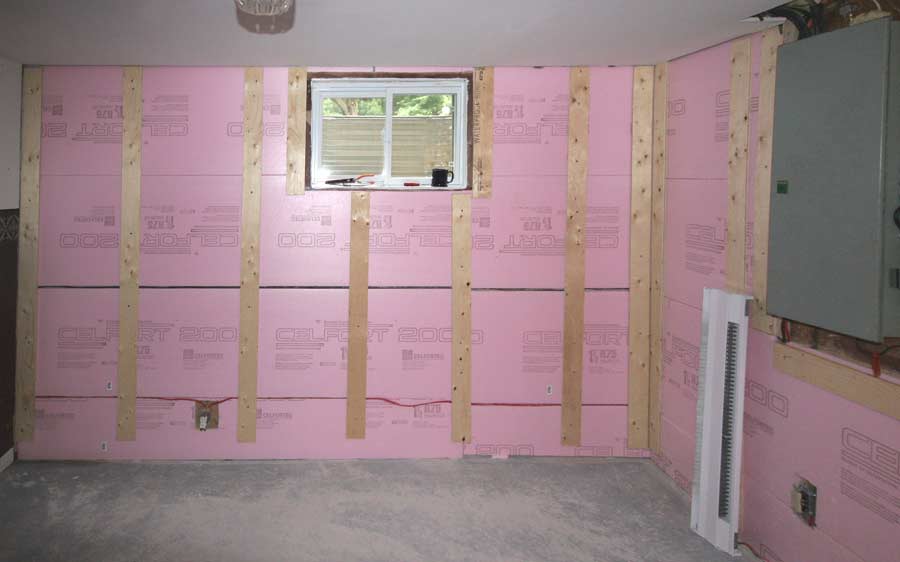 Now, when I got futher into checking out the condition of the walls and the insulation contained within them, I just made an on the spot decision to tear it all out. Like Mike Holmes would say: "It's all gotta come down!". On the outside wall, there was about 1" of beaded styrofoam, but only at the upper 3 feet, the rest had nothing. This was overlaid with, count them, 2, not 1, layers of drywall. The drywall was held up by 2" x 2" strapping. The beaded styrofoam sat between this, with lots of air gaps. In addition, some of the inside walls had mould on the bottom of the drywall. Not a good situation. The fun part about ripping out drywall is that it goes very quickly. The drudgery part is cleaning it all up. Next came the strapping. Down to clear bare concrete walls.
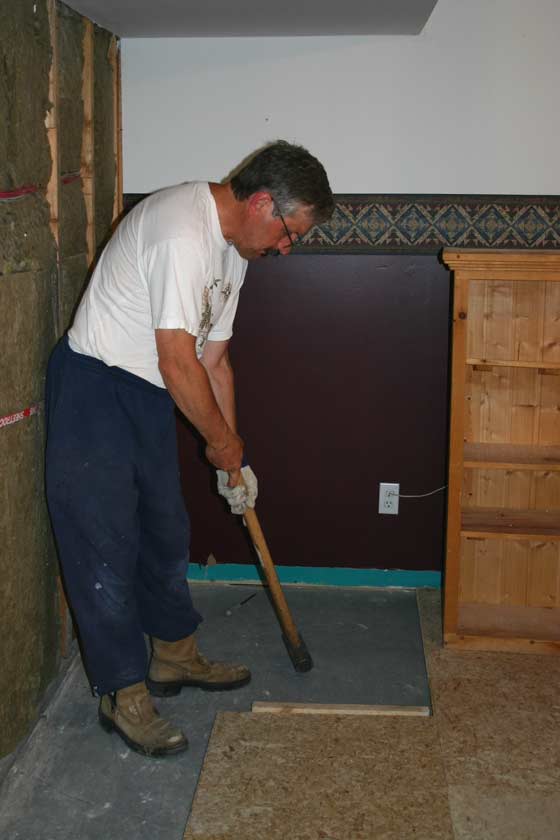 Next, I applied the OvrX. Hmm, wish I could say this was a snap to install. Unfortunately, it wasn't. I had one heck of a time keeping the tiles aligned. The tiles are tongue-and-groove and I suppose that it doesn't take much for OSB chips to clog the tongue, forcing you to bang away at the other end of the to-be-inserted tile. Too much banging puts the previously laid tiles out of alignment and so round and round we go.
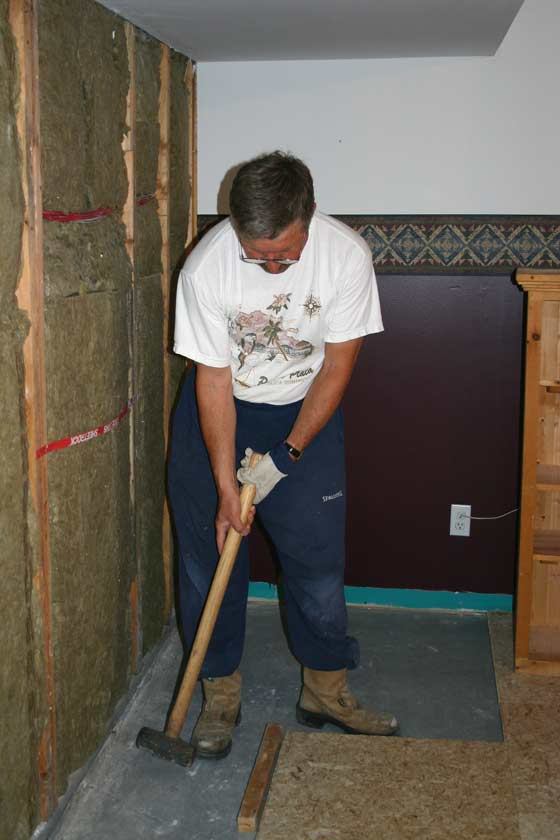 you have no 'banging' room. I used a tool for applying laminate flooring to get at least some leverage, but still, it was a struggle. In the end, I decided to drive some Tapcon screws through some of the pieces where the seams weren't all that close together. This is something I rather would not have done.
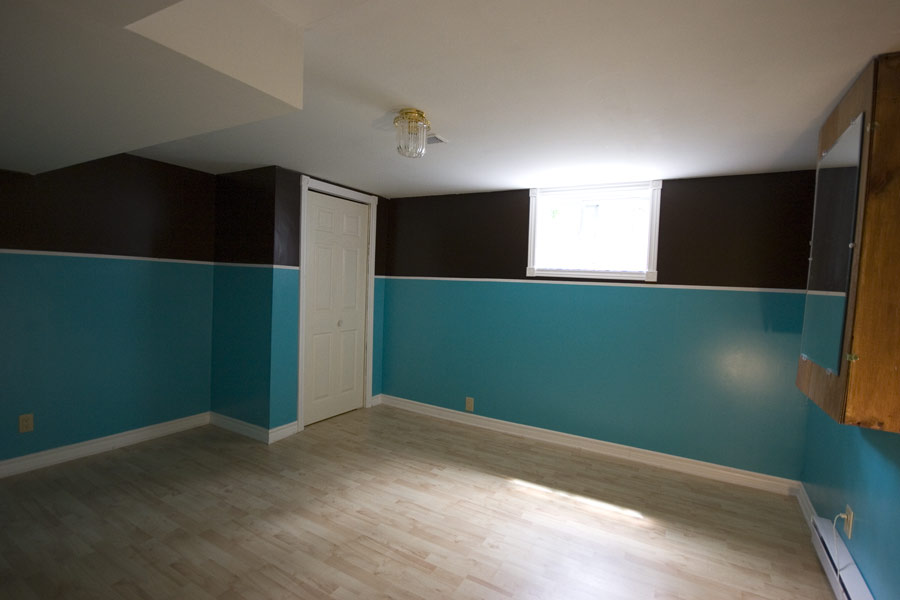 the design for that and the application of it was done by Amanda!
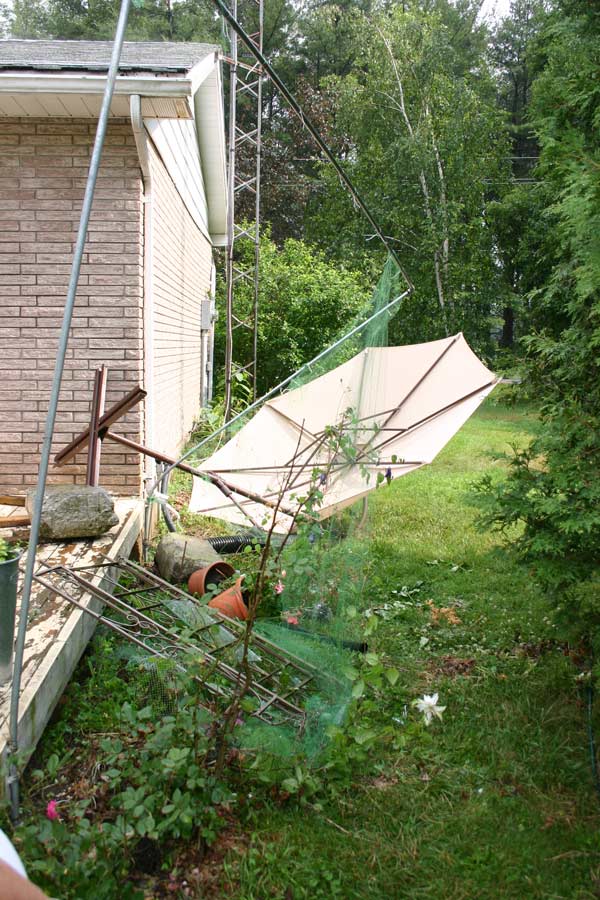
 Living in the country and in this part of the country means that you have to put up with certain nuisances city dwellers can only dream of.
 out for a couple of hours.
 Notice the hydro wires. Do planes and that type of equipment get along?

 OvrX ( www.ovrx.com ) is 1/2" Styrofoam mechanically bonded to 5/8" OSB. The styrofoam has grooves cut (or ground might be a better term) on the bottom, to allow for air and moisture to pass through. Total thickness is 1 1/8" or 29mm.
 Here is the setup, soldering iron on the left, temperature monitor on the right, spaced about 1', I mean 30 cm apart. In this case, they are positioned on top of the OvrX material.
 Here's the complete setup, with the cooler positioned over top to minimize the influence of the ambient temperature. You can see the Dricore tile on edge on the left and a leftover piece of 2" (51mm) Styrofoam on the right. You could probably argue and say that, hey, there was an air gap caused by the wires forcing the rim of the cooler up, but my answer is that that applied evenly to all the tests, so the net effect was zero.
 Google has done it again. On March 14, they bought up a small startup software company called @Last Software. This company produced Sketchup, a 3D modelling tool and sold it for $495.00 per copy. On April 26, Google released it to the world...for free. I should say that you can still buy a professional version of Sketchup, but for the average Jill or Joe, the free version should do nicely.
 We're planning an addition to the house to be built sometime this year. Basically, a 1 room extension, dimensions 14' x 20' (or 4.6m x 6.5m). So I got started, drawing this in Sketchup, just to get an idea what it might look like.
In doing research for converting Latitude and Longitude to UTM, I came across Jeff Poskanzer's web site (www.acme.com). While perusing his site, I noticed one item that piqued my interest: Google planimeter. It allows you to calculate the area for either large or small areas and anything in between, with a good degree of accuracy! How it's done, I don't know, but it sure is interesting. In short, it shows you a Google Map, you place points on it by clicking your mouse and when you think you've got enough accuracy, you read the total area displayed just below the map. Way cool! So, there was a massive rainstorm in the US on April 29th and 30th (2006). From Accuweather.com I copied the map showing the average rainfall expected for the area involved. Then, I used the Google Planimeter involved to compute the total area. As you can see, the area measured 1.292e+6 km2, which equals 1.292 million square kilometers (I only measured the 2 inch rainfall area.) 2 inches equals 5 cm. To calculate the total amount of rain:
 1,292,000,000,000 x .05 = 64,600,000,000 cubic meters. That's 64 billion 600 million!
 From www.intellicast.com, I got the actual situation as of about 7:30 am April 29th.
 Sitting down at my computer in the basement, I heard a rustle in the leaves collected in the window well. This drew my curiosity, as it drew his. The stare-off was a draw: he went his way and I went mine, though not until after I had rattled off some shots on the 20D.
 Spring has been very mild this year, and everything is way ahead of normal. I already saw some fruit trees in bloom. The birds, well they do what comes naturally this time of year. They're all lovy-dovy. Just check out these mourning doves who where carrying on (and all now) in the crab apple tree up front.
  The hours around dawn and dusk are what photographers call the magic hour, since that's when the light plays tricks on our eyes with its softness and long shadows. At that time, I love to take a walk to deep in the back yard, and then just stand there, looking back. Usually this time of year there is little wind then, so everything is so still and quiet, except for the cardinals singing their majestic song. Spine tingling/bone chilling. Here's the shot from way back there. I tried to record the cardinals' song, but I'm going to have to run out to Radio Shack to git me a microphone pre-amp, as it just wasn't loud enough. You really do need to see the larger version of this shot to even remotely get an idea as to what I'm talking about.
 Then I took a walk in the forest, and lo and behold, I saw a trillium in bloom! In April! Most of our trilliums are red, white ones are somewhat rare around here for whatever reason.
Today's White Thursday, but I presume this doesn't mean a whole heck of a lot to too many people out there. To me, it conjures up images of being liberated from school for 2 weeks (Easter vacation), daffodils in bloom, selling cheese to fat Germans driving mid sixties Volkswagen beetles, eating hard boiled eggs (and lots of them).
The odd year White Thursday coincides with my birthday. And so it was in 1959. I remember getting a soccer ball as the main present. Actually, calling it a soccer ball is a bit of an exaggeration, since it was a cheap plastic ball, oblong to boot (pun intended). It also sprung a leak about a week after I got it. Lo and behold, it was replaced with a better version! Woohoo!
Still in all, happy memories. Or should I say bittersweet?
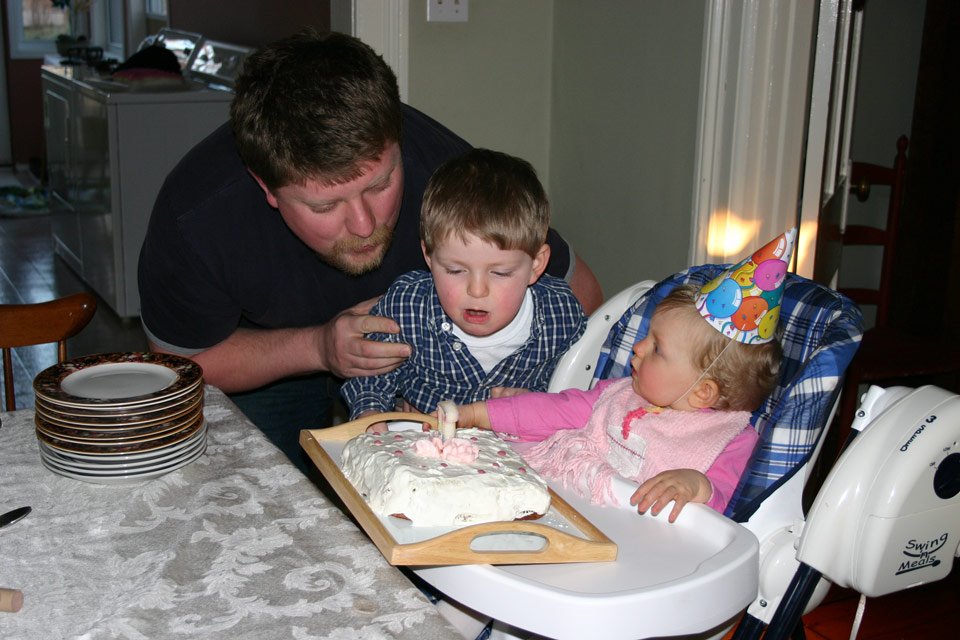 For those of you not in the know, Amaryn celebrated her first birthday last week (April 6th to be exact), blissfully unaware of the whole thing, as a 1 year old should be. She did manage to play the part though in the traditional stick-your-hand-in-the-birthday-cake-and-smear-it-all-over-your-face routine that all 1 year-olds have to undergo.
It is only my personal opinion, and therefore easily dismissable, but I do believe she is going to be a genius in languages, as already she is saying 'bye bye', 'thank you' in a quite audible manner. Of course, languages are not necessarily restricted to human communication only... I mean, what would you call Visual FoxPro?


And now, for something completely different:
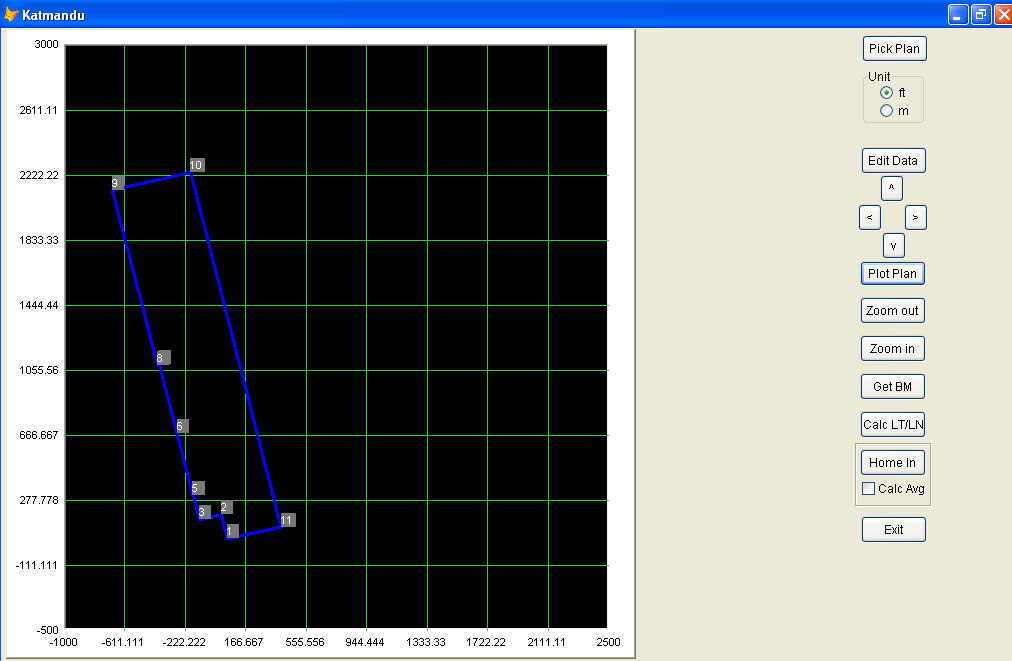
A friend of mine works for Rogers Communications, a huge cable company in this part of Canada. He's involved in 'plant': that part of the business that deals with physical assets in the field i.e. the location of swith boxes, cables, routers, switches, hubs and the like. He wanted to know if I knew anything about conversion from latitude/longitude to UTM (Universal Transverse Mercator) Coordinate System. I said I didn't and we left it at that.
But then for fun I got poking around on the web and found a version in PHP done by Jim Studnicki. He, in turn, had translated this from a function originally written in C by Jef Poskanzer. I spent some time converting Jim's PHP version to Visual FoxPro and after the usual minor problems I got it to work. I must say this is the first time I used the DTOR() (degrees to radians) function in VFP. (not that function is hard to mimic otherwise: pi/180).
Anyway, here it is. It ain't pretty, but if you need it, you can fix it up yourself. Once you have it up and running in VFP, test the results against any of the UTM conversion calculators on the web to verify your results.
Hopefully it can help some other VFP developer in the future. This is what is so absolutely fabulous about the web: the free sharing of information. Ten years ago, getting an answer to this would have been a real problem. Now, anybody with half a brain can do this.
*Keith Hekker 2006-04-02
*Translated from a PHP function by Jim Studnicki
=ConvertToUTM(43,-80)
Procedure ConvertToUTM()
PARAMETERS Latitude, Longitude
* convert decimal geographic coordinates to UTM
*
* param latitude as decimal
* param longitude as decimal
cOldDecimals = SET("DECIMALS")
SET DECIMALS TO 6
* square of eccentricity of equatorial cross-section
ECCENTRICITY_SQUARED = 0.00669437999013
* eccentricity prime squared
ECC_PRIME_SQUARED = ECCENTRICITY_SQUARED /;
(1.0 - ECCENTRICITY_SQUARED)
* radius of Earth in meters
EQUATORIAL_RADIUS = 6378137.0
* scale factor
K0 = 0.9996
* make sure longitude is between -180 and 180
IF longitude < -180.0
longitude = longitude + 360.0
ENDIF
IF longitude > 180.0
longitude = longitude + 360.0
ENDIF
* get UTM letter
DO CASE
CASE latitude <= 84.0 and latitude >= 72.0
utmLetter = "X"
CASE latitude < 72.0 and latitude >= 64.0
utmLetter = "W"
CASE latitude < 64.0 and latitude >= 56.0
utmLetter = "V"
CASE latitude < 56.0 and latitude >= 48.0
utmLetter = "U"
CASE latitude < 48.0 and latitude >= 40.0
utmLetter = "T"
CASE latitude < 40.0 and latitude >= 32.0
utmLetter = "S"
CASE latitude < 32.0 and latitude >= 24.0
utmLetter = "R"
CASE latitude < 24.0 and latitude >= 16.0
utmLetter = "Q"
CASE latitude < 16.0 and latitude >= 8.0
utmLetter = "P"
CASE latitude < 8.0 and latitude >= 0.0
utmLetter = "N"
CASE latitude < 0.0 and latitude >= -8.0
utmLetter = "M"
CASE latitude < -8.0 and latitude >= -16.0
utmLetter = "L"
CASE latitude < -16.0 and latitude >= -24.0
utmLetter = "K"
CASE latitude < -24.0 and latitude >= -32.0
utmLetter = "J"
CASE latitude < -32.0 and latitude >= -40.0
utmLetter = "H"
CASE latitude < -40.0 and latitude >= -48.0
utmLetter = "G"
CASE latitude < -48.0 and latitude >= -56.0
utmLetter = "F"
CASE latitude < -56.0 and latitude >= -64.0
utmLetter = "E"
CASE latitude < -64.0 and latitude >= -72.0
utmLetter = "D"
CASE latitude < -72.0 and latitude >= -80.0
utmLetter = "C"
OTHERWISE
* returns "Z" if the latitude is outside the UTM limits of 84N to 80S
utmLetter = "Z" *
ENDCASE
lat_rad = DTOR(latitude)
long_rad = DTOR(longitude)
zone = INT((longitude + 180) / 6) + 1
IF latitude >= 56.0 and latitude < 64.0;
and longitude >= 3.0 and longitude < 12.0
zone = 32
ENDIF
* Special zones for Svalbard.
IF latitude >= 72.0 and latitude < 84.0
DO CASE
CASE longitude >= 0.0 and longitude < 9.0
zone = 31
CASE longitude >= 9.0 and longitude < 21.0
zone = 33
CASE longitude >= 21.0 and longitude < 33.0
zone = 35
CASE longitude >= 33.0 and longitude < 42.0
zone = 37
ENDCASE
ENDIF
* +3 puts origin in middle of zone
long_origin = (zone - 1) * 6 - 180 + 3
long_origin_rad = DTOR(long_origin)
N = EQUATORIAL_RADIUS / sqrt(1.0 - ECCENTRICITY_SQUARED *;
sin(lat_rad) * sin(lat_rad))
T = tan(lat_rad) * tan(lat_rad)
C = ECC_PRIME_SQUARED * cos(lat_rad) * cos(lat_rad)
A = cos(lat_rad) * (long_rad - long_origin_rad)
M = EQUATORIAL_RADIUS *;
((1.0 - ECCENTRICITY_SQUARED / 4 - 3 * ;
ECCENTRICITY_SQUARED * ECCENTRICITY_SQUARED / 64 - 5 *;
ECCENTRICITY_SQUARED * ECCENTRICITY_SQUARED *;
ECCENTRICITY_SQUARED / 256) * lat_rad - (3 * ;
ECCENTRICITY_SQUARED / 8 + 3 * ECCENTRICITY_SQUARED *;
ECCENTRICITY_SQUARED / 32 + 45 * ECCENTRICITY_SQUARED *;
ECCENTRICITY_SQUARED * ECCENTRICITY_SQUARED / 1024) * ;
sin(2 * lat_rad) + (15 * ECCENTRICITY_SQUARED *;
ECCENTRICITY_SQUARED / 256 + 45 * ECCENTRICITY_SQUARED *;
ECCENTRICITY_SQUARED * ECCENTRICITY_SQUARED / ;
1024) * sin(4 * lat_rad) - (35 * ECCENTRICITY_SQUARED *;
ECCENTRICITY_SQUARED * ECCENTRICITY_SQUARED / 3072) *;
sin(6 * lat_rad))
easting = K0 * N * (A + (1 - T + C) * A * A *;
A / 6 + (5 - 18 * T + T * T + 72 * C - 58 *;
ECC_PRIME_SQUARED) * A * A * A * A * A / 120) + 500000.0
northing = K0 * (M + N * tan(lat_rad) *;
(A * A / 2 + (5 - T + 9 * C;
+ 4 * C * C) * A * A * A * A / 24;
+ (61 - 58 * T + T * T + 600 * C -;
330 * ECC_PRIME_SQUARED) * A * A * A * A * A * A / 720))
IF latitude < 0.0
* 1e7 meter offset for southern hemisphere
northing = northing + 10000000.0
north = .F.
ELSE
north = .T.
ENDIF
? "Easting = " + TRANSFORM(easting)
? "Northing = " + TRANSFORM(northing)
? "North = " + TRANSFORM(north)
? "Zone = " + TRANSFORM(zone)
? "UTM Letter = " + TRANSFORM(utmletter)
SET DECIMALS TO &cOldDecimals
RETURN
The incredible forces of Mother Nature have always intrigued me. Consider this for a minute:
Yesterday, we had a rain storm across Norfolk County. It was the usual scenario, one that has been playing itself out for thousands or years and will continue to do so for at least the foreseeable future, climate change notwithstanding.
It had been a warm day, up to a maximum of 21 C. It rained moderately for a couple of hours just before a cold front swept through, dropping the temperature behind it to 10 C. According to the Environment Canada website, 12 mm of rain fell at Delhi, just down the road. No big deal, it happens all the time.
Where things get interesting is when you start looking at the numbers. The area of Norfolk County is 1,609.95 square kilometres, about 2.5 times that of the City of Toronto at 661 square kilometres. Assuming that the rain fell evenly across Norfolk County, we do the calculation for the total volume of rain in cubic metres as follows:
1,609.95 x 1,000 x 1,000 x .012 = 19,283,400 cubic freakin' metres!
Yes, that is right, more than 19 million cubic meters. If one were to lay these end-to-end, the wall of water, 1 metre high and 1 metre wide, would reach halfway around the world, before it would run out.
Now, let's take this one step further. That water just didn't happen to get there on its own. It had to evaporate from the ocean to get here. In yesterday's case, it most likely came from the Gulf of Mexico. OK, it takes 600 calories to evaporate 1 gram of water, so that's 600,000 calories for 1 litre or 600,000,000 (600 million) for 1 cubic metre.
This is where it gets really handy to have the Command Window of Visual FoxPro handy, as the numbers get so large, it's easy to lose track. (Even handier to have the _CLIPTEXT system variable available). To evaporate all that water
19,283,400 x 600,000,000 = 11,570,040,000,000,000 calories are needed
Sorry, but I don't know how to pronounce that number. Nevertheless, we carry on. We convert this number to Joules. By the way, 1 Joule is about the equivalent to the amount of energy you expend when you lift a small apple 1 metre off the ground.
11,570,040,000,000,000 calories = 48,409,047,360,000,010 Joules
Now, although a beautiful unit of the metric system in its own right, the Joule is exceedingly meaningless to most people. So let's try kW (kilowatt-hour)
48,409,047,360,000,010 Joules = 13,447,065,175 kW/hr or roughly 13.5 million Megawatt/hr
To put this into perspective, the Nanticoke Power generation station on Lake Erie generates 4,000 Megawatt/hr. It would have to run 3,361 hours (that's about 20 weeks) at full bore to generate that amount of power.
Yet another way:
48,409,047,360,000,010 Joules = 45,891,776,897,279 BTU/hr
An average house furnace is about 100,000 BTU/hr, so it would take 458,917,768 (that's 458 million) house furnaces burning solid for 1 hour to evaporate the water involved.
And I'm only talking Norfolk County!
Furthermore, I haven't even talked about the energy involved to transport the water vapor 2,000 km from the Gulf of Mexico to Norfolk County.
Some useful formulas:
1 calorie = 4.18400 joules
1 Joule = 2.7778×10⁻⁷ kilowatt-hour (or otherwise 0.00000027778 kilowatt-hour)
1 Joule = 9.48×10⁻⁴ BTU (or otherwise 0.000948 BTU)
 ...that the Rolling Stones played a venue known as Brabanthal in Den Bosch, Netherlands. And I was there. This was my first big rock event. The Stones had made a name for themselves over the previous couple of years and their lone previous appearance in the Hague (Scheveningen) had ended in a major riot where the 'audience' destroyed the concert hall. So this sounded like fun. That day (March 26th) was my birthday (still is, as a matter of fact). My brother Gerard had been able to somehow obtain 4 tickets for this concert and was kind enough to invite me along. He had, under false pretenses I might add, also been able to borrow a Volkswagen Beetle off some guy he knew at work. Not that the car was an absolute necessity, but it sure made getting there a lot easier than having to take public transit to Den Bosch as it was about 100 km away. So off we drove, late in the afternoon, the 4 of us squeezed into the bug.
  The venue was normally used to auction cattle, so since the place was already a pigstye, I guess the organizers figured this was the ideal place for a rock concert. Not that the word concert was actually used for an event like that back in those days: that term was strictly reserved for classical music events. To call a performance by the Stones a concert would have been sheer blasphemy. Total number of spectators was extremely low as well: 9000. The entrance fee was pretty steep though: 10 guilders, which converted to about $3 US back in 1966.
 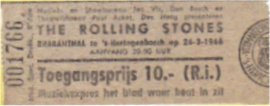 The warm up acts were Dutch groups, among them the Outsiders and the Bintangs, both now revered in Dutch pop history. The late Wally Tax was the leader of the Outsiders, and a legend in his own mind even back then. I remember we made our way in through some kind of small side entrance. The hall was already packed and the concert was in progress. There were no seats, everybody just sort of piled up against the stage. Talking about the stage, it wasn't exactly up to today's standards: very few, if any spotlights, no massive amplifier banks and speakers. The only fireworks would have been Keif smoking on stage. Mick was his usual trade mark self. From the setlist I don't remember much: the only thing that comes to mind is '19th Nervous Breakdown', the end riff where Bill Wyman's bass sonically mimics a person slide into a state of mental anguish.
The next time I saw the boys live was at Sarsstock in Toronto in 2003, 37 years later. Number of spectators: 500,000.
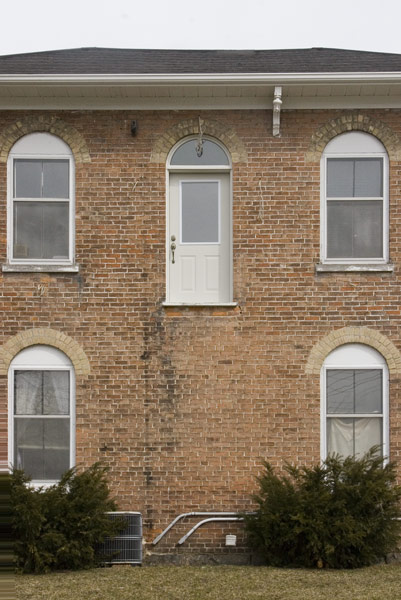
 ...for if it wasn't for your destructive behaviour I never would have found out about the Waterford Heritage Rail Trail. You see, some time ago there was a report in the local newspaper about some fences being destroyed on this trail. So, with a little bit of sleuthing, we found out where the trail runs. Turns out it is just about under our nose, well, say 6 km directly east of us, just east of Hwy 24 on Townsend Road #12.
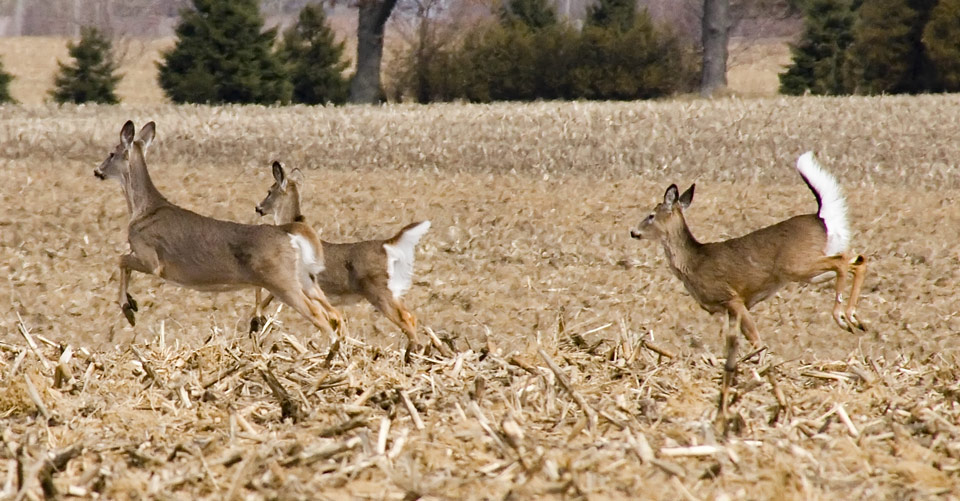 Today, we decided to take it for a test spin. And it's certainly worth exploring. It runs through, as the brochure describes it, a 'pastoral' landscape, consisting of about 60% farmer's fields and the rest bush and thickets. As luck would have it, just 20 minutes into our walk, three deer appeared from behind a low hill to our right. We looked at them, they looked at us, then off they ran, white tails being waved like fans on a summer's day.
 The trail is around 6.2 km in length, of which we did the top 4 return. In addition to that, we walked into Waterford and had a coffee/tea in "The Cafe".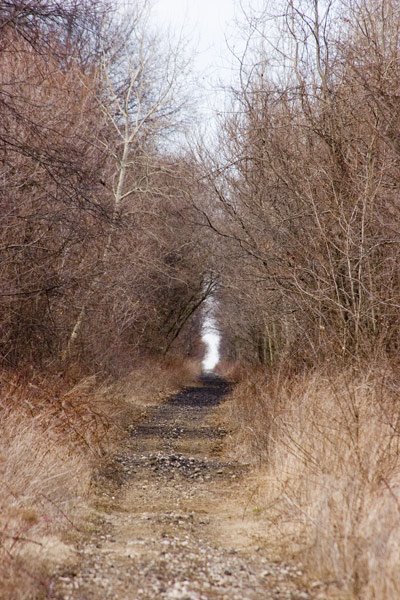
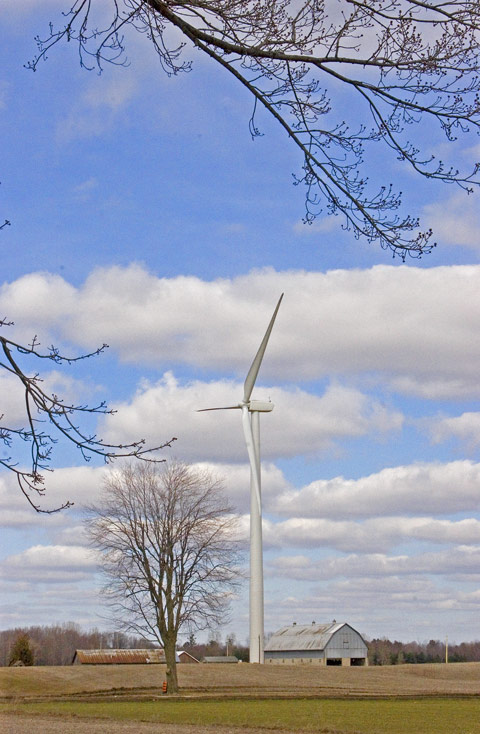
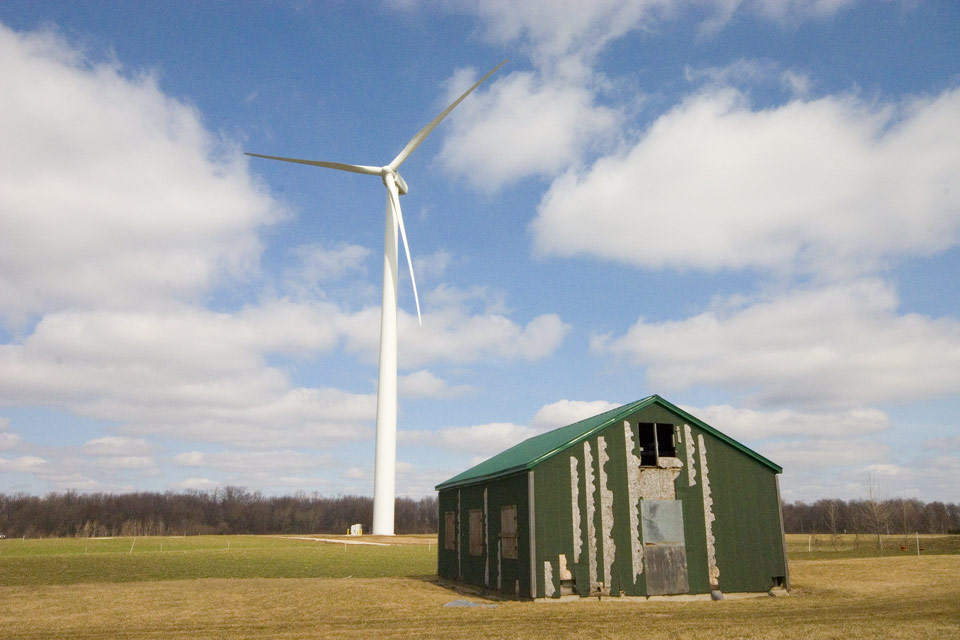
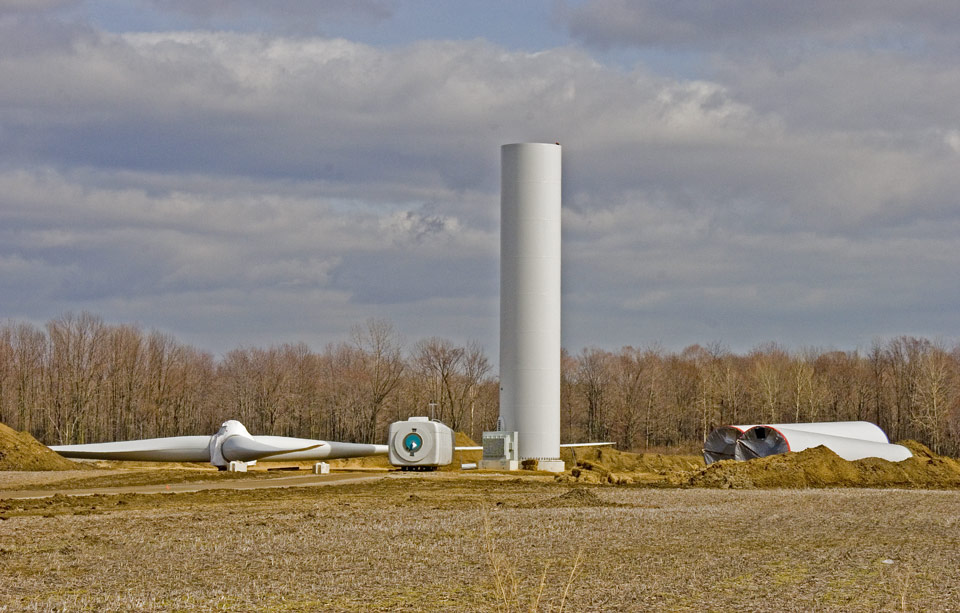
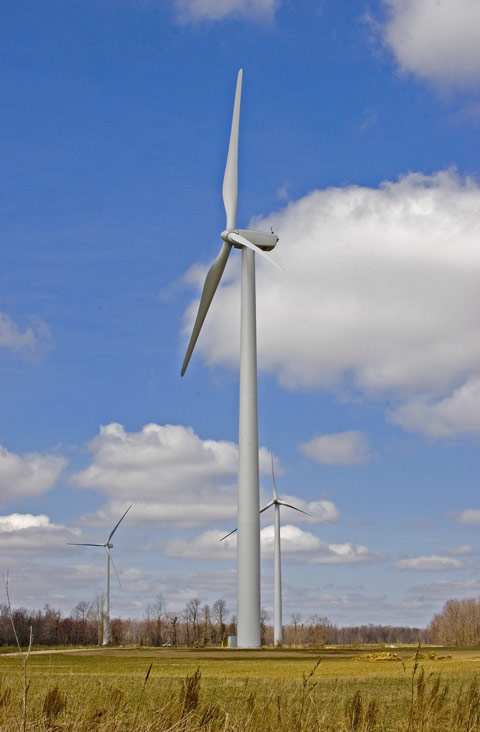 Along the northern shoreline of Lake Erie, east of the sleepy little fishing town of Port Burwell, contractors are currently constructing 66 wind turbines. Each of these turbines is capable of generating 1.5 MW (megawatts), so the total project's potential is 99 MW, enough to power 30,000 homes. As a comparison, Toronto's lone Exhibition Place generator is capable of producing .75 MW, enough for 250 homes.
 the site, approximately 50 km to the southwest of where we are. The weather was partly cloudy, with the temperature hovering around zero degrees celsius, a little cool for this time of year, but not too bad.
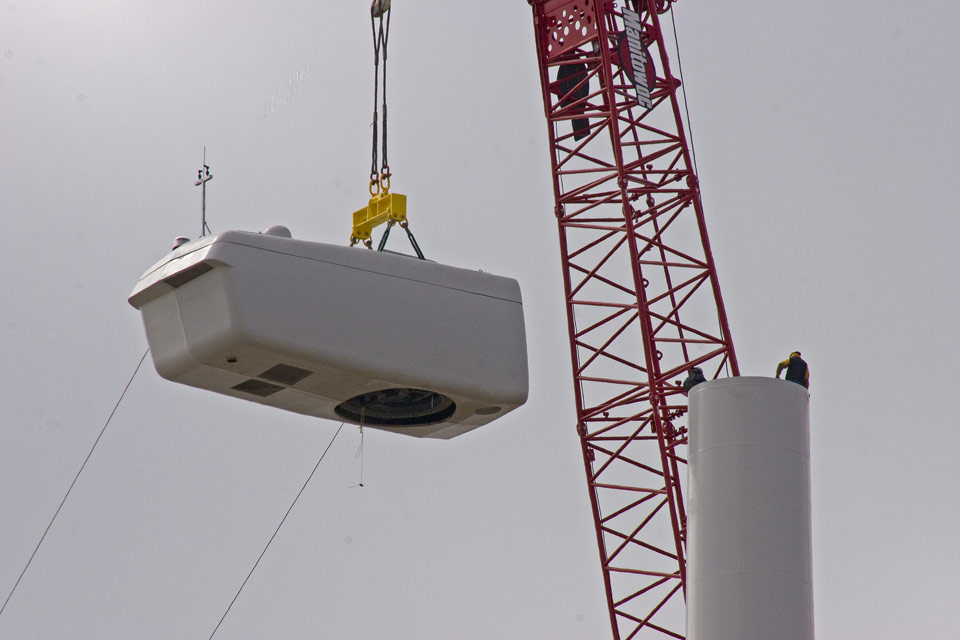 are very big. Produced by GE (General Electric), they are of the SLE type. The hub (i.e. the tower) can reach heights of 61m to 85m. The total rotor width is 77 m. There are about 25 in Norfolk County, the rest is in Elgin County.
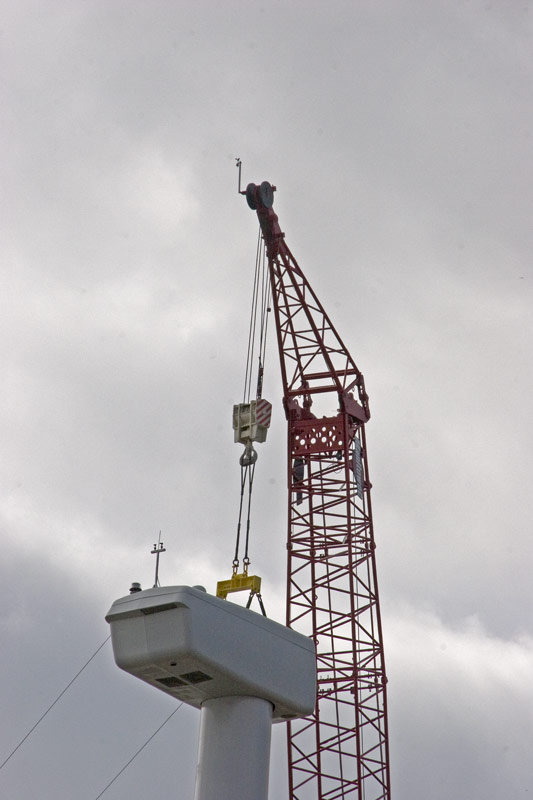 20 minutes. Obviously, these people had done this before. No sooner was it positioned in place or we could hear the ratchet air wrenches being used to tighten the bolts fastening the nacelle to the tower. In order to prevent the nacelle from slamming into the tower on the way up, two cables were attached to a dozer winch, which slackened while the nacelle was being hoisted.
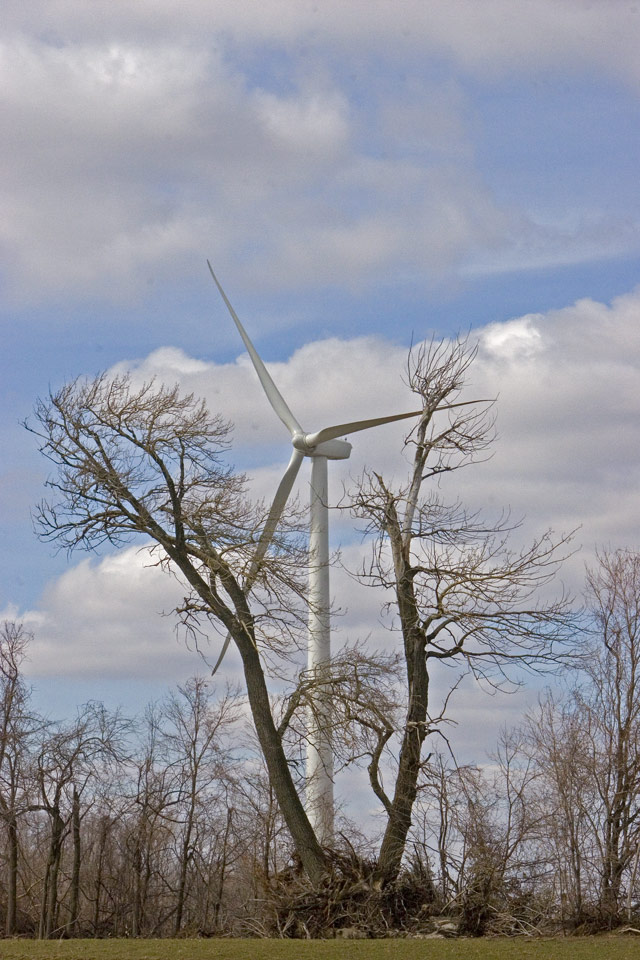 Across the road, I framed a ready-to-go turbine between two weather beaten t
 rees.
rees.